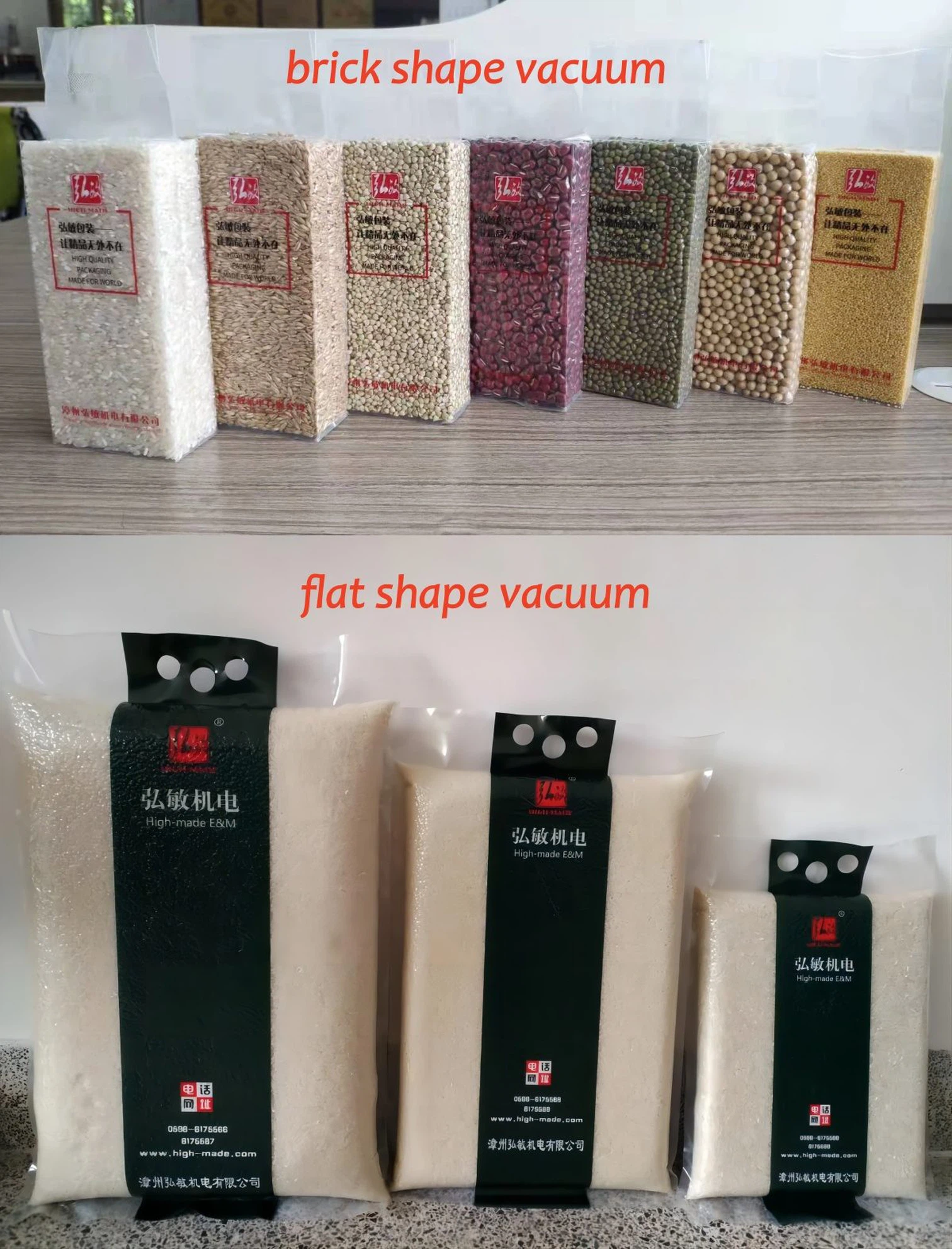


In the competitive world of bulk food processing and retail packaging, the "look" of your product is often just as critical as the seal integrity. When deciding between flat vacuum bags and brick shape vacuum bags (often referred to as side-gusseted or stand-up vacuum bags), the choice usually comes down to your storage efficiency goals and your shelf-presence strategy.
The Versatility of Flat Vacuum Bags
Flat vacuum bags are the industry workhorse. Primarily used for proteins, cheeses, and flat-profile items, their main strength lies in simplicity and cost-effectiveness.
Seal Integrity: Because they lack complex folds, achieving a consistent, high-micron seal is straightforward, reducing the risk of leakers.
Flexibility: They conform perfectly to irregular shapes, making them ideal for sous-vide applications or primal cuts of meat.
Storage: When empty, they take up minimal warehouse space compared to pre-formed pouches.
However, from a retail perspective, flat bags tend to "slouch" when stacked vertically, which can sometimes obscure branding on a crowded shelf.


The Precision of Brick Shape Vacuum Bags
If you are packaging granular products like coffee, rice, or grains, the brick shape vacuum bag is often the superior choice. By utilizing a side-gusseted design and a forming mold during the vacuum process, the package achieves a rigid, rectangular structure.
Shelf Appeal: The flat bottom and "brick" rigidity allow the product to stand upright. This provides a premium, organized look that maximizes "facings" in a retail environment.
Logistical Efficiency: Just like Tetris, square bricks stack much more efficiently in shipping cartons. You can often fit 15–20% more product into a standard pallet compared to loose, flat bags.
Durability: The structured shape provides an extra layer of puncture resistance for dense, heavy contents.
Which One Should You Choose?
The decision typically hinges on your product density. If you are dealing with liquids or whole-muscle meats, the flat vacuum bag offers the best barrier protection and cost-per-unit.
On the other hand, for dry goods where branding and pallet optimization are key, the brick shape offers a professional finish that justifies the slightly higher material cost. Both options provide excellent oxygen barrier properties to extend shelf life-it's simply a matter of how you want that shelf life to look.